Set up the case
Inputs, units, assumptions, references, and intended QoIs become one runnable case.
An AI-native multiphysics simulation platform that can set up, run, debug, compare, and explain engineering simulations across thermal, structural, fluid, electromagnetic, and coupled domains.
Anvil shortens the path from engineering question to reviewable result. The public site now mirrors the product shape: inputs, solver run, comparison target, evidence artifact, and the next validation step stay close together.
Inputs, units, assumptions, references, and intended QoIs become one runnable case.
Solver kernels produce fields, trajectories, modal responses, thermal maps, and logs.
The reference, QoI, tolerance, status, and artifact stay visible in the same row.
The output becomes an engineering packet that can be inspected, questioned, and reused.
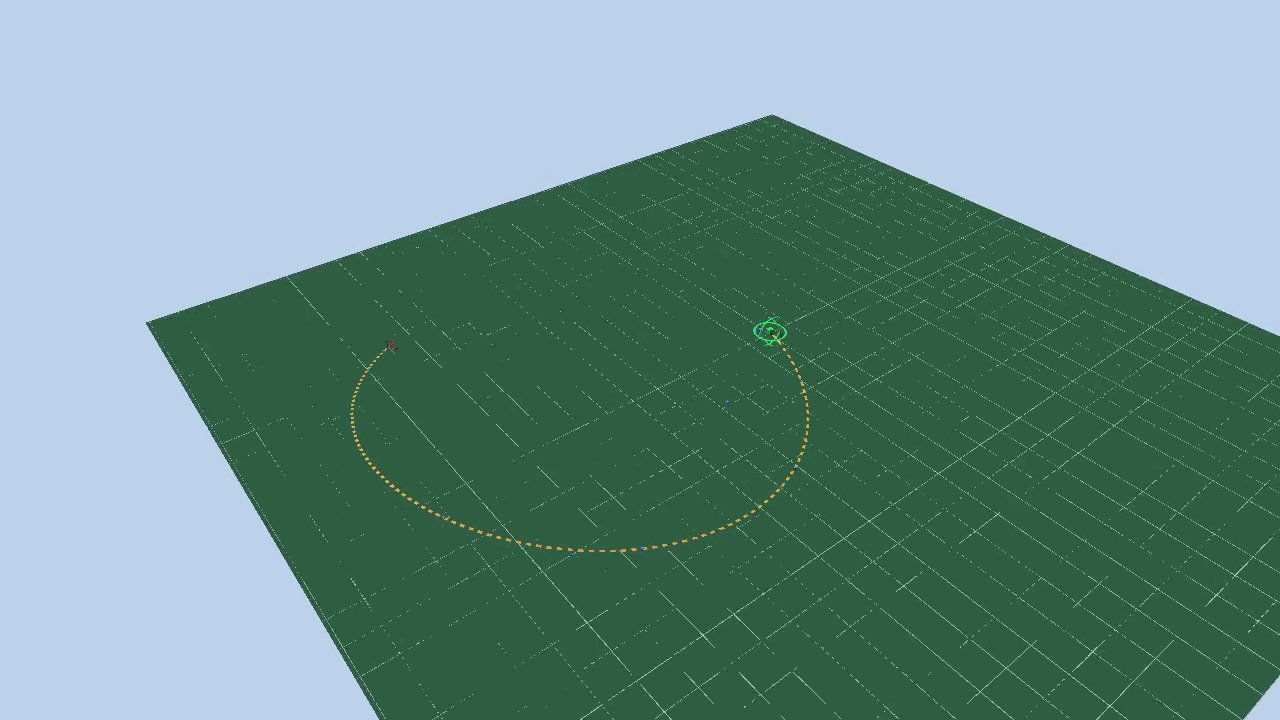
A 3D flight-path replay makes the boomerang trajectory legible first, then links it to return-window diagnostics and the evidence packet. The flight-path video makes the motion legible, while the diagnostics packet keeps the solver evidence and next validation steps connected.
The diagnostics panel keeps the engineering review visible: return-window error, height over time, receipt summary, and next validation steps.
evidence: V4 return-window evidence packet
validation: Configured v4 return-window solver gate, with measured-flight and aerodynamic correlation as the next validation path.
Anvil should look impressive and stay reviewable. The product direction is to make each flagship demo clickable down to the physics claim, inputs, solver evidence, benchmark gate, validation focus, and next evidence step.
A configured blade-element v4 solver trace enters the 0.50 m return window while airborne before first ground contact. The site shows the visual replay and the evidence route together.
evidence: V4 return-window evidence packet
next: Measured-flight and wind-tunnel correlation.
Static, modal, and forced-response evidence reels show Anvil's current structural evidence spine: benchmark rows, native capture receipts, and .anvilprov-backed replay paths.
evidence: FRF harmonic-response evidence packet
next: Broader certification, fatigue, weld, and preload cases.
Thermal-SIMP and electronics-airflow previews point toward heat-sink, enclosure, and AI chip package workflows where temperature QoIs, power assumptions, and validation data must stay visible.
evidence: Thermal-SIMP and electronics thermal-airflow public clips
next: Chip-package temperature tolerances and reference data.
The CFD work is being pushed through canonical rungs: manufactured/simple flows, conservation checks, mesh sensitivity, then public benchmark cases before any flagship claim.
evidence: Benchmark ladder and solver-gauntlet receipts
next: Reacting-flow reference cases and published deltas.
Source CAD, topology hashes, source-face selection, load/constraint binding, mesh quality, and remesh-stable evidence are becoming first-class evidence inputs.
evidence: Evidence-packet schema and provenance receipts
next: Source-face evidence carried through meshing and solver setup.
Robot bracket and robotics-style workflows are being shaped into design-review packets: claim, geometry, loads, material assumptions, solver output, validation steps, and next evidence.
evidence: Robotics evidence-packet queue and validation focus ledger
next: Source-face and reference-solver comparisons for robotics cases.
The Mac app is becoming the review room: evidence-packet library, visual replay, benchmark deltas, provenance, reviewer packet routes, and validation steps in one place.
evidence: Native Mac Evidence Console build
next: Visual readiness is kept separate from proof readiness.
The public trust wall makes the current evidence level easy to scan: reference passes, target rows, validation focus, and latest artifacts.
| Benchmark | Reference | QoI / tolerance | Status | Validation focus |
|---|---|---|---|---|
| Boomerang return-window gate Boomerang flight path | Scenario-local acceptance gate with a public expansion path | Trajectory enters the 0.50 m return window while airborne before first ground contact. | SCENARIO EVIDENCE | Current public evidence is scenario-local return-window evidence; measured-flight and wind-tunnel correlation are the next expansion path. |
| FRF cantilever harmonic response Structural dynamics | Analytic fixed-free beam and same-input CalculiX B32 | Peak 8,150 Hz vs CalculiX 8,178.154 Hz; 0.3443% peak-frequency delta and 0.0233 normalized curve RMS. | REFERENCE PASS | Current public evidence is cantilever harmonic response against analytic and CalculiX references. |
| Static cantilever Hex8-EAS stress Static FEA | Bernoulli-Euler same-location Gauss-point stress reference | Stress error 1.4588e-2 at 20x4x2 and 5.1531e-3 at 40x8x4. | REFERENCE PASS | Current public evidence is integration-point stress evidence with mesh refinement. |
| NAFEMS linear-elastic core rows NAFEMS structural | NAFEMS published linear-elastic targets | Selected LE rows are within declared tolerances; additional families remain in validation. | REFERENCE ROWS | Current public evidence separates passing linear-elastic rows from modal and shell expansion rows. |
| NAFEMS FV4 offset-mass cantilever Modal dynamics | NAFEMS FV4 first-six-mode reference case | Target first-six-mode accuracy; direct shifted-solve routes are finite, but worst-mode error remains about 91% at the n10 rung. | VALIDATION TRACK | Mode-shape, model-form, and dense-solver comparison are the current validation focus. |
The customer-grade surface is the Evidence Console: a skeptical engineer should be able to inspect the visual, open the evidence packet, check source geometry and assumptions, read solver/reference deltas, and see exactly how the evidence package expands next.
The site leads with the Boomerang flight-path replay, pairs it with solver diagnostics, and keeps the rest of the proof portfolio available by domain for engineers, customers, and reviewers.